VIS Issue 15, LANGUAGE/ LANGUAGED/ LANGUAGING, was published on 19 March 2026. The issue contains eight contributions that in various ways center on language. Contributions that move with language or against it, and that approach language as a site for ethical and aesthetic experimentation and reflection. Editor is Tale Næss, co-editor Michael Duch.
VIS #15 – THEME: LANGUAGE/ LANGUAGED/ LANGUAGING
Language is never neutral.
How we write is connected to why we write. This is also true in artistic research – in artistic research praxis as well as for the dissemination of the research we do.
Language is never passive.
Language is action. It is doing. And it continuous to «do» as long as it is activated. As long as it is – let’s call it: present.
Through language our experiences are shared and distributed. Through language tacit knowledge is verbalised and systematized. Through language artistic and subjective sentiment is pushed to the forefront or withheld – and through language aesthetic preferences, world views and even ideologies are given form. Even in some instances – performed.
In this issue of VIS – Nordic Journal for Artistic Research, we want to take a closer look at the relationship between artistic research and the act of language-making. Language as a tool, as a place for ethical and artistic experimentation and as a vehicle for dissemination within the artistic research field.
When looking for contributions we asked for expositions that explored the role of language. We asked for contributions that put language at the forefront, that explored the edges of what language can do or the way we understand it. We have also been looking for contributions that reflect on the role and place of language in artistic research praxis and dissemination at large.
We were searching for expositions that addressed language as a vehicle of power and that tried to show how it is not just a tool to be used freely. Language as something heavily politicized – and we were looking for polylingual approaches or expositions that questioned the position and domination of majority languages in our society.
In VIS we especially welcome contributions in the Nordic languages – and in this issue, you will also find expositions that delve into the bilingual reality of the everyday north and its human, artistic and political implications.
Finally, we asked; when it comes to language production – can artistic research come about without it?
There are eight expositions in VIS # 15:
Renée Turner’s The Annotated Garden & Compost
Ektoras Arkomani’s Passages in translation
Sanna Svane’s Slumpgenerator som begränsande och befriande faktor – en studie av bokstavskombinationer i svenska registreringsnummer
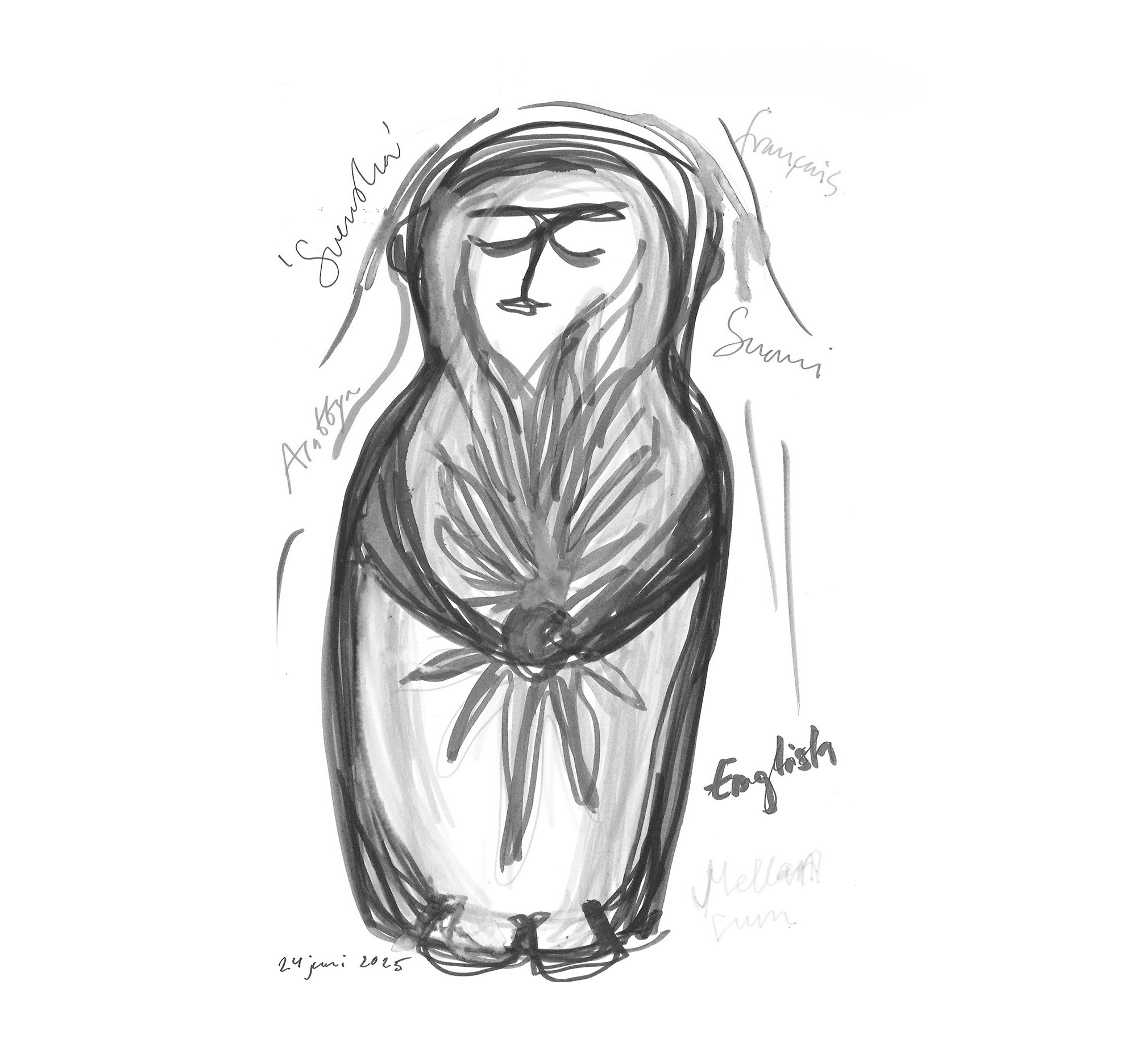
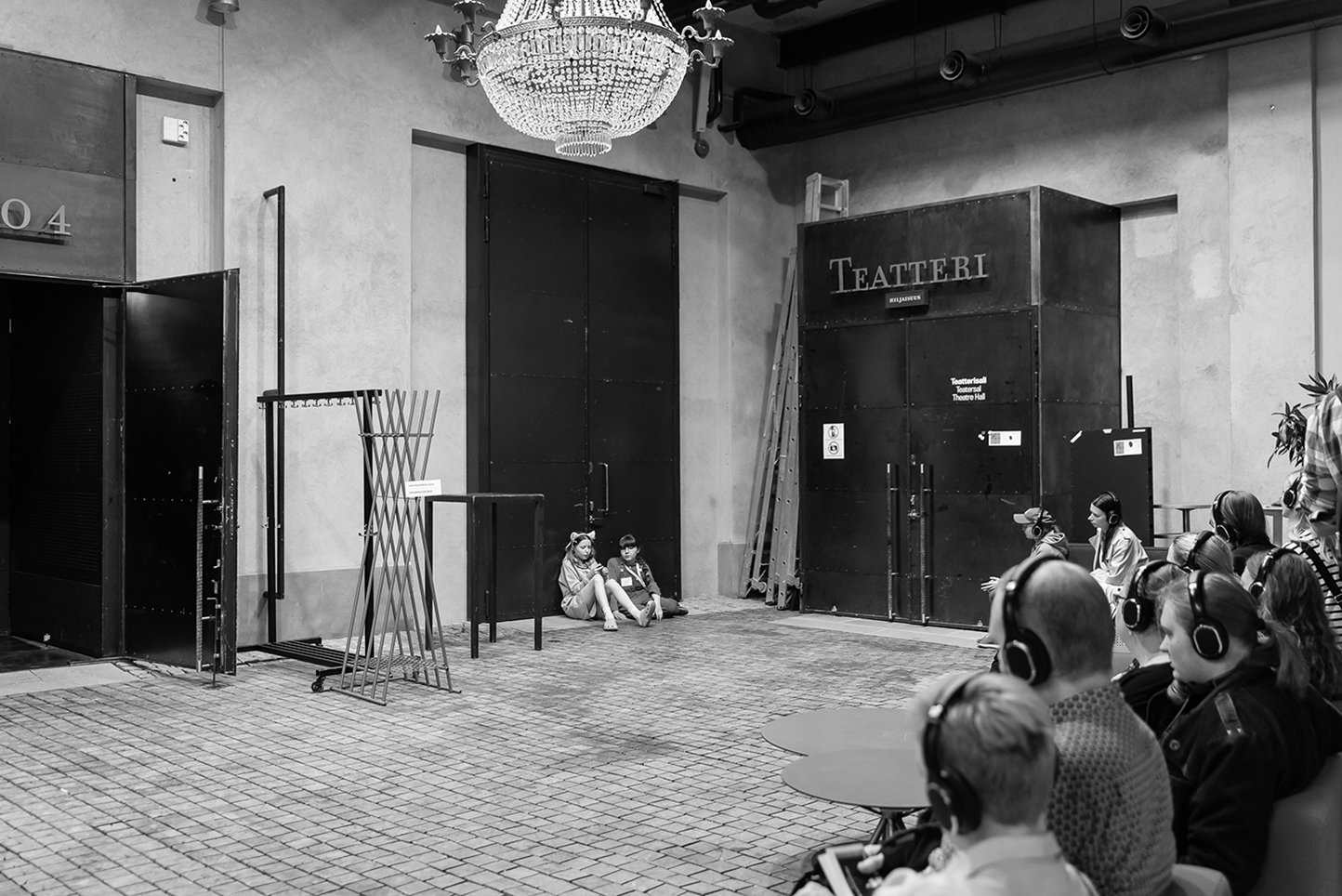
Vanja Hamidi Isacson’s FLER_SPRÅKIG TYSTNAD : MONI_KIELINEN HILJAISUUS : MULTI_LINGUAL SILENCE
Nora Rinne’s Voicing Language: Approaching Language through Voice in Intergenerational Performance
Svea Vikander’s In the earth my berry lies/Maassa marjani makaa
Eirunn Kvalne’s A poem is a small... machine made out of words
and
Niels Lyhne Løkkegaard’s Incompleting places – surrection and mirage making through topocosmological hypering
In these expositions you will find prose, poetry, notes and documentation. There are contributions that plays with the connection between images and words. Contributions that focus on sound and voice, and in several of the expositions – the additive nature of language itself shows language as material.
Here we have contributions where thinking is made coherent, and contributions that exposes what happens when what’s seemingly coherence fall apart and meaning gets displaced or shifts, forcing the reader to produce her own understanding of that which is at stake.
Some contributions experiment with language as a tool for reflection. Some look at the relationship between human language production and the machine or its relationship to AI. Others look at the art of translation or the relation between language production and society. There are also contributions that look at language as a topos of trauma – societal or personal.
*
Artistic research does not exist in a vacuum but relies on, just as much as it might oppose, the reality and the institution that «supports» it. Economically, socially and culturally.
Turning artistic sentiment and experience into sentences and words is often at the chore of artistic research and dissemination. At the same time each work of art constitutes a text “in itself”. A text to be “read” and interpreted. What we are looking at here is and active feedback loop where language-making is never totally separated from the subject that produces it, nor from the context it is produced in.
This act or translation is often at the chore of what goes on when artistic research is disseminated. The question is – on what premises does this “translation” come about. And what kind of processes take place.
When search is such a vital part of the art making as well as the reflection in a research project – a search for meaning, a search for coherence, and a search for words – this also entails a willingness to go the edges of what’s possible. Possible to do and to possible formulate. And through the act of making research language “happen” new realities are created, and new worlds appear. Real or imagined.
In web-based expositions like the ones in this issue each page has a dramaturgy of its own. A dramaturgy that encourages a certain reading strategy. That speeds the reading up or slows it down. Separates the different elements and aspects, ore connects them and interlinks them.
They may make us jump between pages, open links or access seemingly hidden material that offers new information on top of what’s already there.
This “set up” influences the way we spend our time in the expositions. The way we engage with them and the way we understand them. It informs the reading process itself.
*
Language can confuse and make clear. With language we reflect and disseminate. We express how we feel and share how we think.
Reading this issue will take time, but we hope that this will be time well spent. Many of the expositions encourages part-taking rather than consumption – and offer up places for knowledge as something shared, and of language as a place to explore.
The issue has come about according to VIS´s wider language policy. All policymaking is power. In this issue we want to use that power to start a process of exposing the complex mechanisms that are activated when language is used within the field of artistic research. We want to celebrate it and demask it and maybe create an afterthought on the role language plays. In doing so, we know that we have merely scratched the surface. The rest is yet to follow.
We hope you enjoy the read.
Tale Næss - Tromsø - March 2026
VIS Editorial Committee 2026: Behzad Khosravi Noori, Eliot Moleba, Gunhild Mathea Husvik-Olaussen, Tale Næss, Michael Duch, Marie Fahlin and Mia Engberg (Efva Lilja until December 2025). Editorial Project Manager: Heidi Möller.
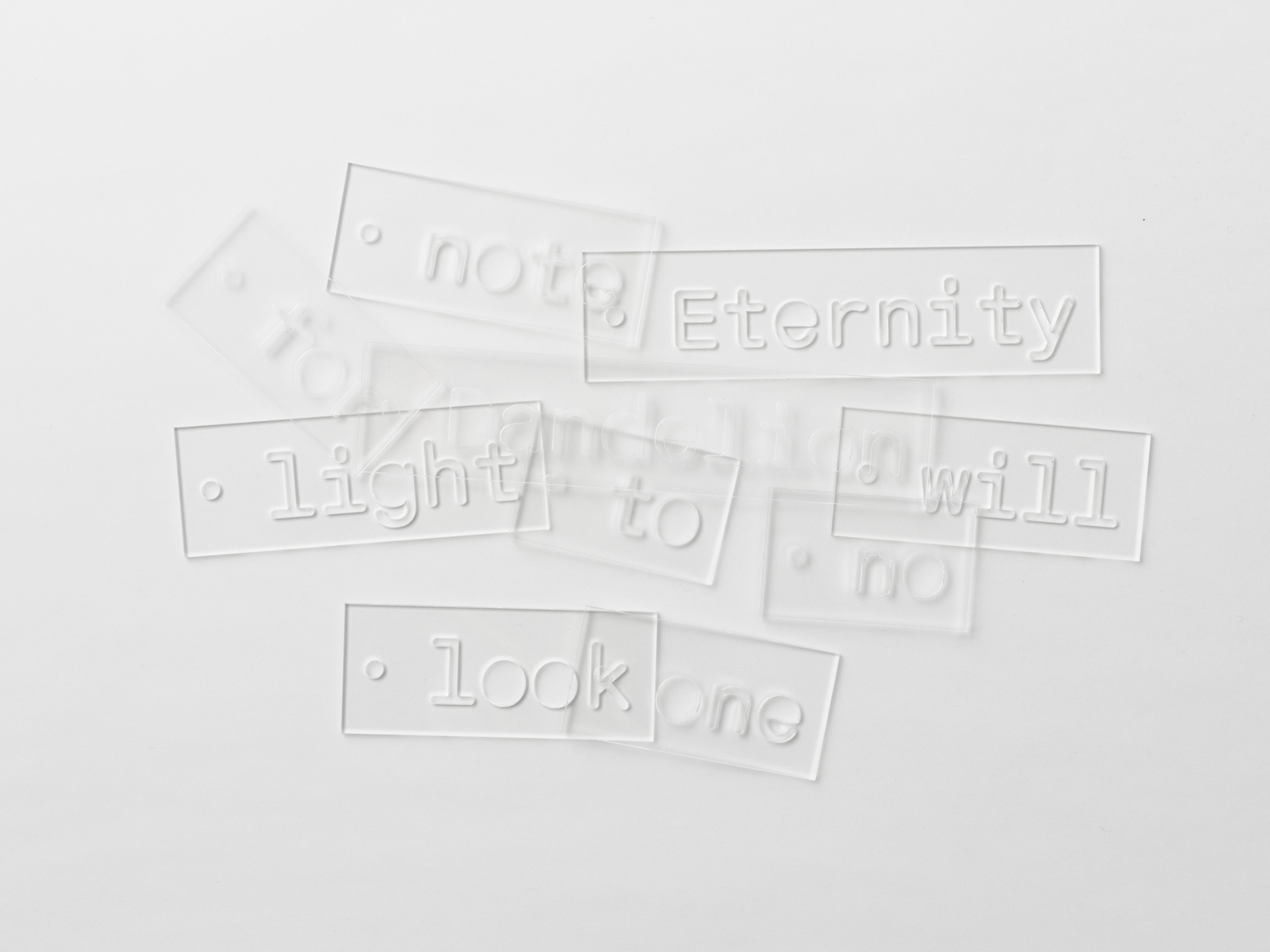
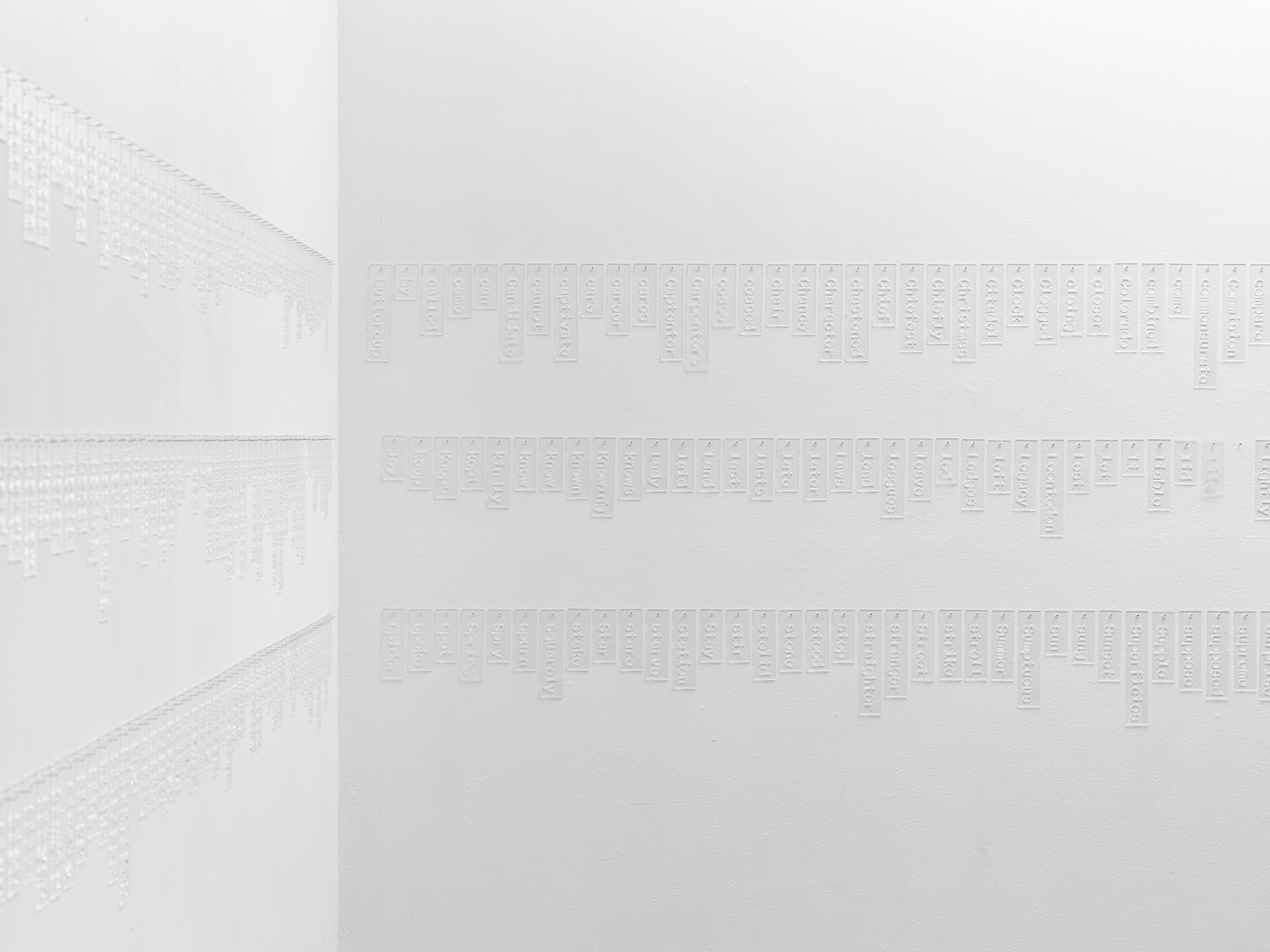
Header from the exposition “A poem is a small... machine made out of words” by Eirunn Kvalnes, photo by Simen Øvergaard.
Image