
The human voice has frequently been overlooked in discussions of language, knowledge, and research. Traditional notions of logos privilege silence, sight, and reading, thereby marginalizing the voice. Yet the voice foregrounds the physical, material, embodied, and relational dimensions of language, and it invites an ethics of listening.
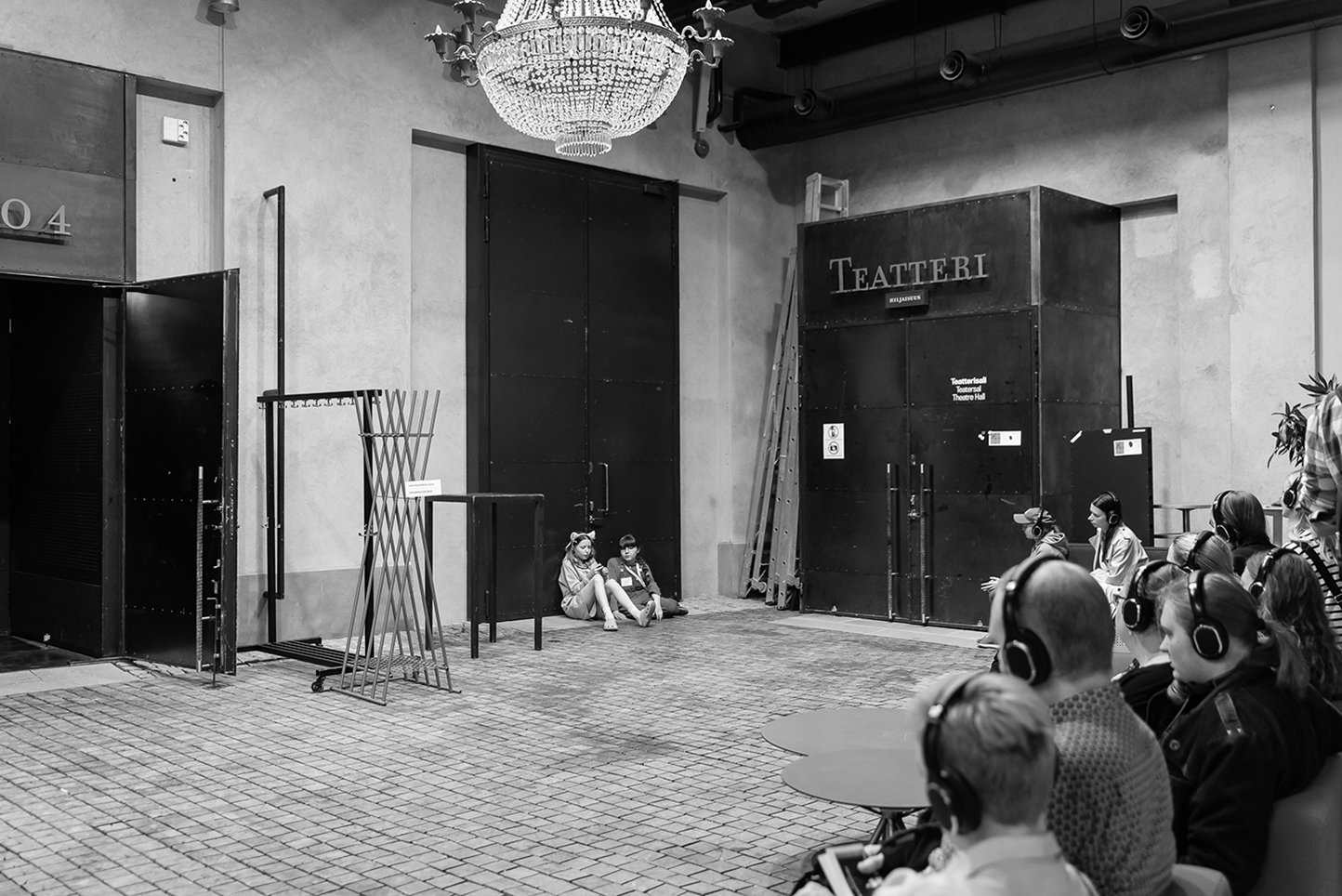
In this exposition based on her artistic doctoral research, performance maker Nora Rinne explores the human voice and speech as primary materials in art-making and research. The performances and performance practices seek to foster intergenerational reciprocity between adults and children through imitation and verbatim repetition, emphasizing listening as an active, embodied practice. The child’s voice is not only a metaphor for social agency and participation. It is also sound – material and embodied – and when it is heard, there is a being who is giving voice. In Rinne’s practice, the voice is heard first; written language enters the creative process at a later stage, functioning as a valuable tool. Writing bends under the pressure of the vocal and material qualities of spoken language, which resist smooth translation into written form, even as writing and speech remain inextricably entangled modes of languaging that continually shape one another.